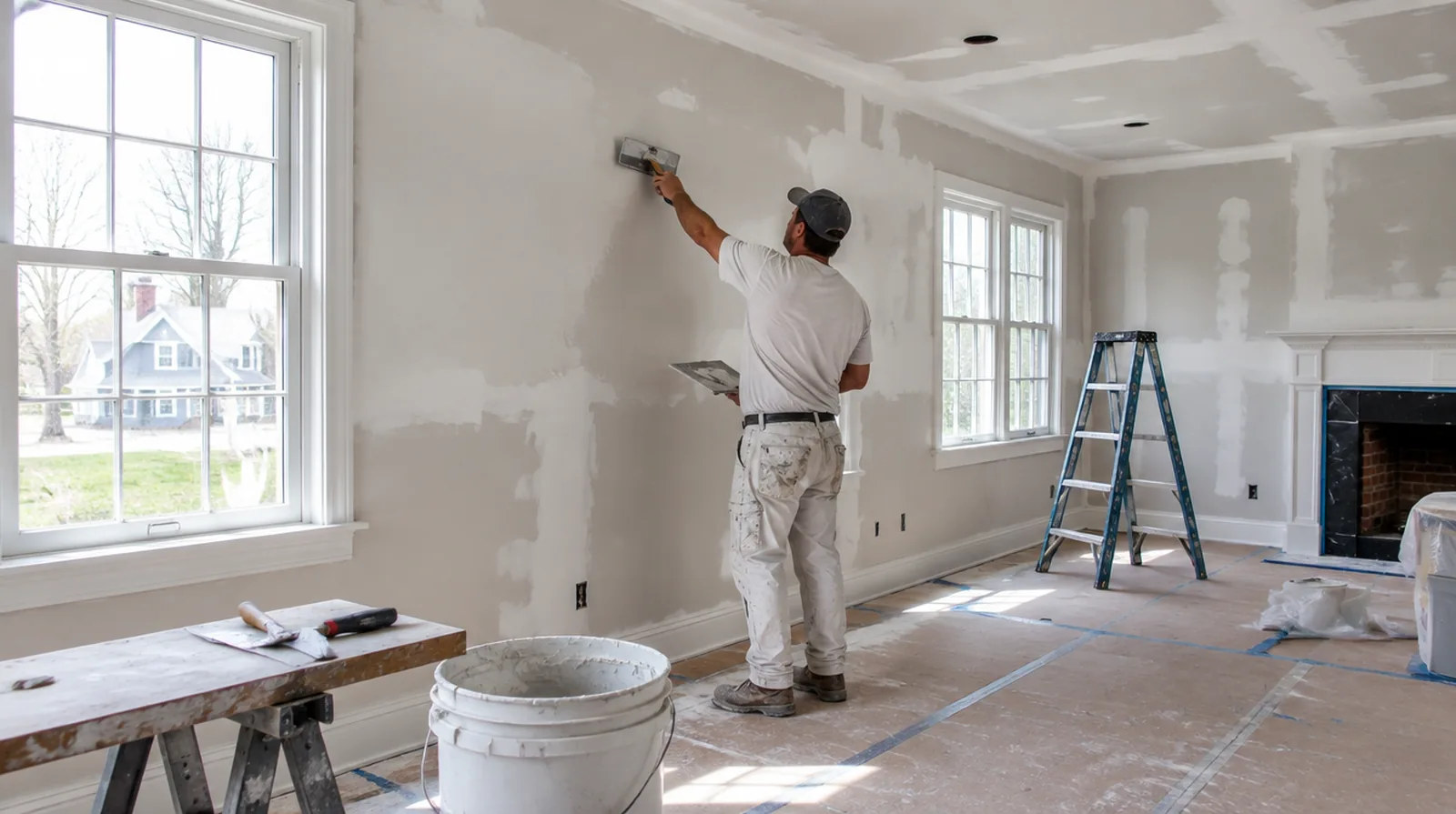
Apply controlled thin layers
Build a refined surface with controlled applications instead of a heavy unsupported deposit. Deeper texture may require successive passes to level low spots without overloading the high points. If there is a fixed move in date, reserve adequate time for the coating stages after drywall work rather than counting only the installation period.
Let each coat dry
Allow each application to become ready for the next under the interior conditions actually maintained. Disturbing soft material too early can undermine an otherwise careful smoothing pass. At a ceiling or wall containing fittings, assign removal and reinstatement duties for the affected devices before repair access is needed.
Stabilize torn paper
Wet finishing material can lift damaged paper if the exposed area has not been suitably prepared. Damaged spots need an appropriate sealing approach before the broad finishing coats are applied. Where occupants have dust sensitivity concerns, agree containment and cleaning measures before settling the way the space will be staged.
Check underlying movement
Surface refinement cannot stabilize framing movement or repair board that no longer holds securely. Assess recurring cracks and complete necessary reinforcement before covering the area with a skim. For a project with several trades, agree which inspection or handover point must happen before the next person starts work.
Choose paint with the finish
Higher sheen coatings can emphasize small variations that a matte finish makes less obvious. Connect the paint selection to the agreed preparation standard before deciding how extensive the skim work should be. If materials must cross common building areas, plan the protection and access route so other occupants are not needlessly obstructed by deliveries.
Refine with minimal sanding
Good application reduces the amount of sanding needed to achieve a uniform finish. Even so, plan dust protection and extraction for the fine particles produced by broad surface work. When painting is outside the proposal, describe the remaining decorative preparation clearly so another contractor can price that stage accurately.
Prime before decoration
Fresh skim compound needs an appropriate primer before the finish paint is applied. Priming equalizes absorption and could help identify small corrections before the last paint coat is applied. When reviewing the finished work, use the agreed lighting and natural room viewpoints so the assessment reflects the intended use of the space.
Clean and prepare the wall
Adhesion can be compromised by dirt, oil or residues left on the old coating. Select cleaning and any necessary bonding preparation according to the actual surface condition. For a repair that crosses several surfaces, measure the affected planes separately so the estimate can explain where each finishing treatment starts and stops.
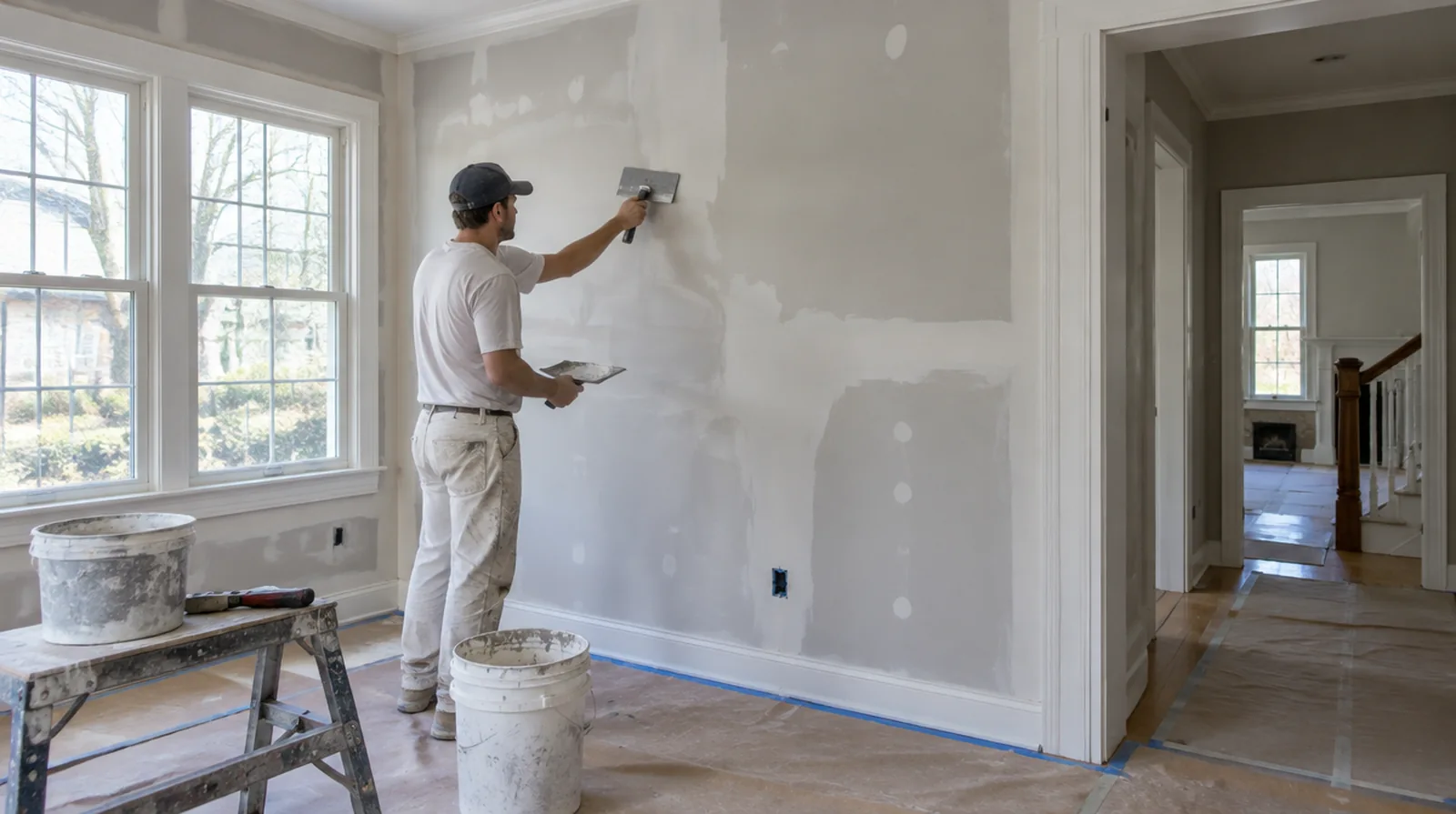
Define the smoothing target
Removing the visual effect of light texture is not the same task as straightening a badly uneven plane. The scope should describe what the skim is expected to improve and what remains outside that finish treatment. If the ceiling or wall includes fittings, identify the person responsible for removing and reinstalling each item before the work begins.
Assess the existing coating
Loose paint and unstable layers need attention before a thin skim can bond reliably. The assessment should distinguish a sound but uneven surface from one that is actively peeling. If the original finish is unusual, keep a small reference sample or a close photograph to support the discussion about blending and restoration.
Project context in Newton
Cracks around Newton windows that reopen every winter usually reflect seasonal movement in old framing. A veneer plaster approach can suit an older Newton wall when a seamless match to original plaster matters.
Scope questions before finishing
For a surface carrying numerous paint layers, discuss whether differences in the retained profile or sheen justify decorating a broader area.
Where a surface has been painted many times, consider whether differences in texture or sheen will require a wider decorative treatment.
If materials must cross common building areas, plan the protection and access route so other occupants are not needlessly obstructed by deliveries.
In a room with little free floor space, identify temporary storage for belongings and establish sufficient clearance for the work before delivery.
If an independent painter completes decoration, agree the condition of the handed over surface and assign responsibility for small final corrections.
If occupancy must resume on a certain day, include the later primer and paint stages in the timetable as well as drywall installation and finishing.
For a surface that will receive wall covering, share the product requirements early so the finishing stage supports the planned decorative treatment.
When the same defect has returned, share information about previous repair methods so the next assessment can consider why they did not last.
If the final paint is already chosen, share its sheen and color early because those choices influence how surface preparation is judged.
For a tightly furnished room, plan temporary storage and the minimum working clearance before material is carried into the property.
When more damage could be hidden, ask how any added scope will be documented before extra material is removed or replaced.
If there is a fixed move in date, reserve enough time for the coating stages after drywall work instead of counting only the installation period.
Explore the Newton drywall overview for related options, or read the project planning information before arranging the next stage.
More planning details for Newton
Postwar capes in Oak Hill and Thompsonville are more likely to have drywall throughout than plaster. Humid summers in homes without central air slow compound drying between coats. Radiator heat in a Newton winter dries the air enough to reopen hairline cracks along ceilings.