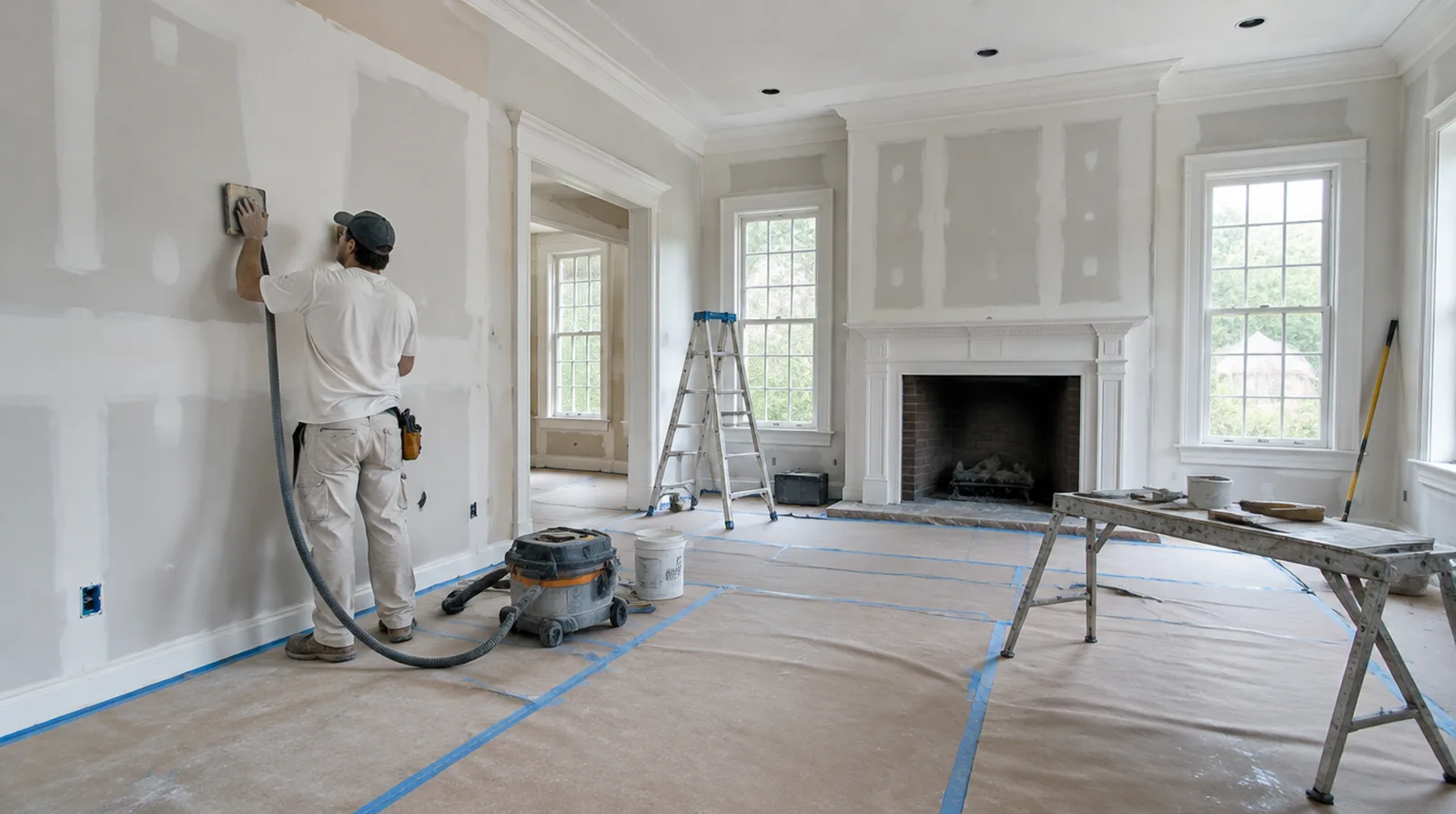
Blend beyond the patch
A sharp rectangular transition can expose the repair even when the new pattern is otherwise similar. Gradually extending the texture into the surrounding surface may make the blend less abrupt. If occupancy must resume on a certain day, include the later primer and paint stages in the timetable as well as drywall installation and finishing.
Consider hand applied surfaces
For a troweled pattern, the tool movement and the spacing between its marks matter. A representative trial is useful when there is no standard machine setting that reproduces the existing finish. Where the wall meets fixed furniture, clarify whether removal is included or whether the finish will terminate at the accessible edge.
Protect surrounding finishes
Texture overspray can settle on trim, flooring and nearby fittings if they are not masked. The protection plan should cover the actual application area rather than only the original hole. While a removed panel exposes the wall cavity, complete the necessary review of concealed work before replacement board closes the opening.
Set realistic blend expectations
Age, paint buildup and irregular original application can limit how closely a patch can blend. If local matching remains obvious, discuss whether a wider surface treatment would be preferable. When panel replacement exposes a cavity, resolve any required inspection before that opening is closed and the finishing work begins.
Judge from normal positions
Assess the dried texture from everyday viewpoints rather than judging only a close view of a wet sample. Include side lighting and the planned paint sheen when deciding whether the result meets the agreed scope. When the work area includes a doorway, check the clearance for panel movement as well as the amount of space available for finishing tools.
Study the paint layers
Repeated painting can soften an old pattern and change how its peaks reflect light. A fresh application could need adjustment to resemble the current surface instead of the original texture recipe. When building management controls access, agree delivery hours and common area protection before committing to a start or finish date.
Allow time before painting
Let a new texture become ready for decoration rather than applying paint onto soft material. The quote should explain whether the next decorating stage is included or left to a painter. If the coating stability is unclear, assess which layers are adequately bonded and which should be removed rather than simply hidden beneath new material.
Check the underlying repair
A decorative pattern will not reliably disguise a ridge or an uneven board joint underneath it. Complete a stable level repair before trying to reproduce the surrounding texture. At the handover inspection, review the finish from ordinary room positions using the lighting conditions that were agreed for the work.
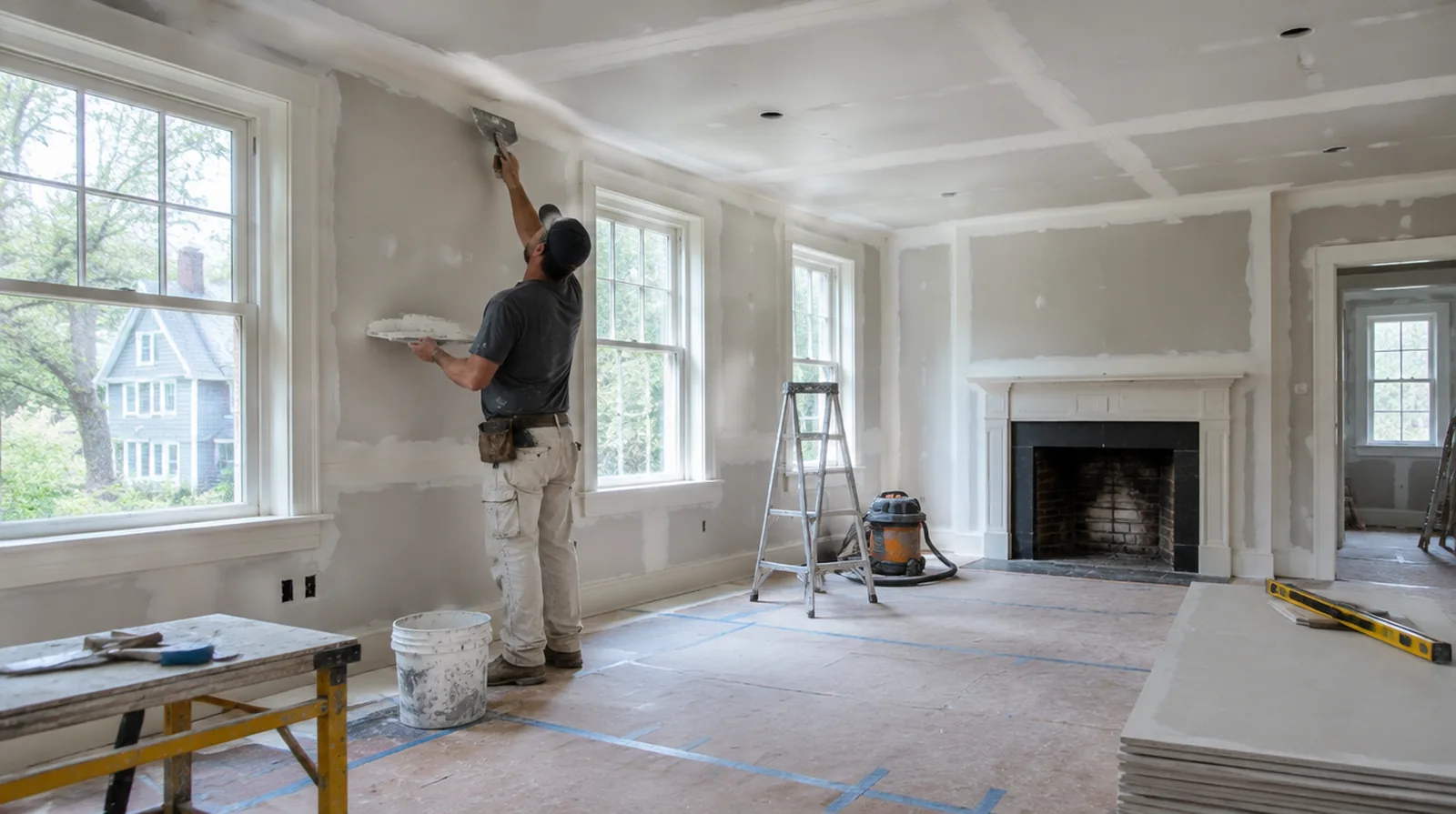
Identify the existing pattern
First determine how the current texture creates its pattern and relief. The existing wall ought to be examined in the actual room lighting before selecting a matching method. For walls beside bright windows, review a dry sample from an oblique angle as well as looking straight at the repaired surface.
Use appropriate primer
New texture and adjacent painted material can absorb finish coats at different rates. Choose suitable primer to support the coating system without unnecessarily flattening the intended pattern. If a room has only limited ventilation, discuss how the finishing materials can dry without disrupting comfort or spreading dust elsewhere.
Project context in Newton
Picture rail, crown and wide casings in older Newton houses should be protected before any cutting starts. Cracks around Newton windows that reopen every winter usually reflect seasonal movement in old framing.
Scope questions before finishing
When reviewing the finished work, use the agreed lighting and natural room viewpoints so the assessment reflects the intended use of the space.
If the decorative coating is already chosen, share its sheen and color early because those choices influence how preparation of the surface is judged.
For an older repair with no clear history, describe when the mark first appeared and whether it has changed through more than one season.
When panel replacement exposes a cavity, resolve any required inspection before that opening is closed and the finishing work begins.
When painting is outside the proposal, describe the remaining decorative preparation clearly so another contractor can price that stage accurately.
For a project with several trades, agree which inspection or handover point must happen before the next person starts work.
For a room with restricted airflow, plan drying conditions alongside dust protection and the comfort of people occupying neighboring spaces.
If access passes through a shared space, arrange protection and a delivery route that do not unnecessarily obstruct other occupants.
At a repair beside an opening, allow clearance for moving board through the doorway and space to use the finishing tools effectively.
For work spread across differing planes, record their dimensions separately and describe the boundary of the treatment on each surface.
If the coating stability is unclear, assess which layers are adequately bonded and which ought to be removed instead of simply hidden beneath new material.
When damage followed other building work, describe the nearby alterations and the sequence between those changes and the first visible defect.
Explore the Newton drywall overview for related options, or read the project planning information before arranging the next stage.
More planning details for Newton
Postwar capes in Oak Hill and Thompsonville are more likely to have drywall throughout than plaster. Winter parking bans in Newton affect where a work vehicle can stay during a multi-day job. Many Newton homes have plaster on wood lath, so a drywall patch must be shimmed flush with the older surface.