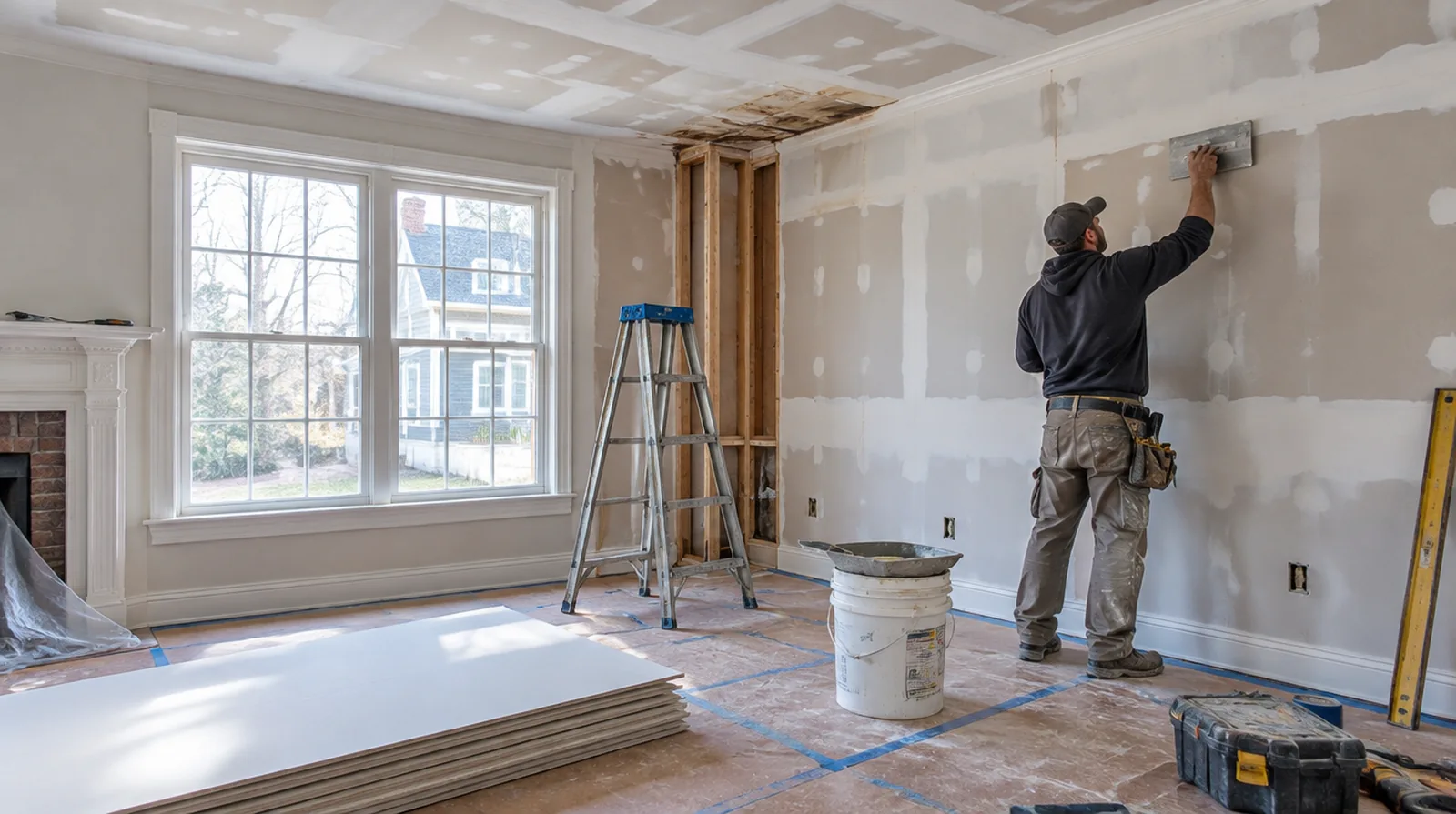
Verify drying readiness
A surface that feels dry can still conceal moisture in insulation or framing. Make clear which professional confirms drying readiness before the cavity is covered again. Where a surface has been painted many times, consider whether differences in texture or sheen will require a wider decorative treatment.
Rebuild supported edges
The new board section must connect firmly to suitable backing or sound framing. A stable repair perimeter helps avoid later cracking where replacement board meets the original surface. If scheduling is the main concern, separate hands on labor from drying intervals instead of treating every visit as a full day of active work.
Agree on decorative boundaries
Restoring the gypsum and achieving a consistent painted room finish are not automatically the same scope. Discuss a larger painting boundary if local decoration would leave a conspicuous difference around the patch. For a tightly furnished room, plan temporary storage and the minimum working clearance before material is carried into the property.
Treat remaining discoloration
Suitable primer may be needed to prevent old water marks from bleeding through the new paint. Choose that treatment only after confirming the discoloration does not signal continuing moisture. For a room that stays in use, set a workable boundary around construction while retaining the access people need for normal daily activities.
Resolve the water source
A leak or condensation problem must be addressed before replacing the affected drywall. Surface repairs alone cannot prevent damage from returning when water is still reaching the assembly. When a quote includes multiple visits, ask what happens during each stage and when the interior needs to remain undisturbed between coats.
Define selective removal
Removing a controlled section provides access for assessment while preserving material that remains sound. The cut boundary also needs to accommodate backing and a practical surface transition. If scheduling is the main concern, separate hands on labor from drying intervals instead of treating every visit as a full day of active work.
Match the board assembly
Replacement board should suit the current thickness and any applicable wall or ceiling assembly requirements. Water resistant products do not remove the have to correct the conditions that caused the damage. When the same defect has returned, share information about previous repair methods so the next assessment can consider why they did not last.
Assess material condition
Staining, swelling, softened edges and loose paper help determine which panels could need removal. The affected material behind the finish may extend past the stain seen from inside the space. When the history of a repair is uncertain, note when it became visible and whether its appearance has altered across distinct seasons.
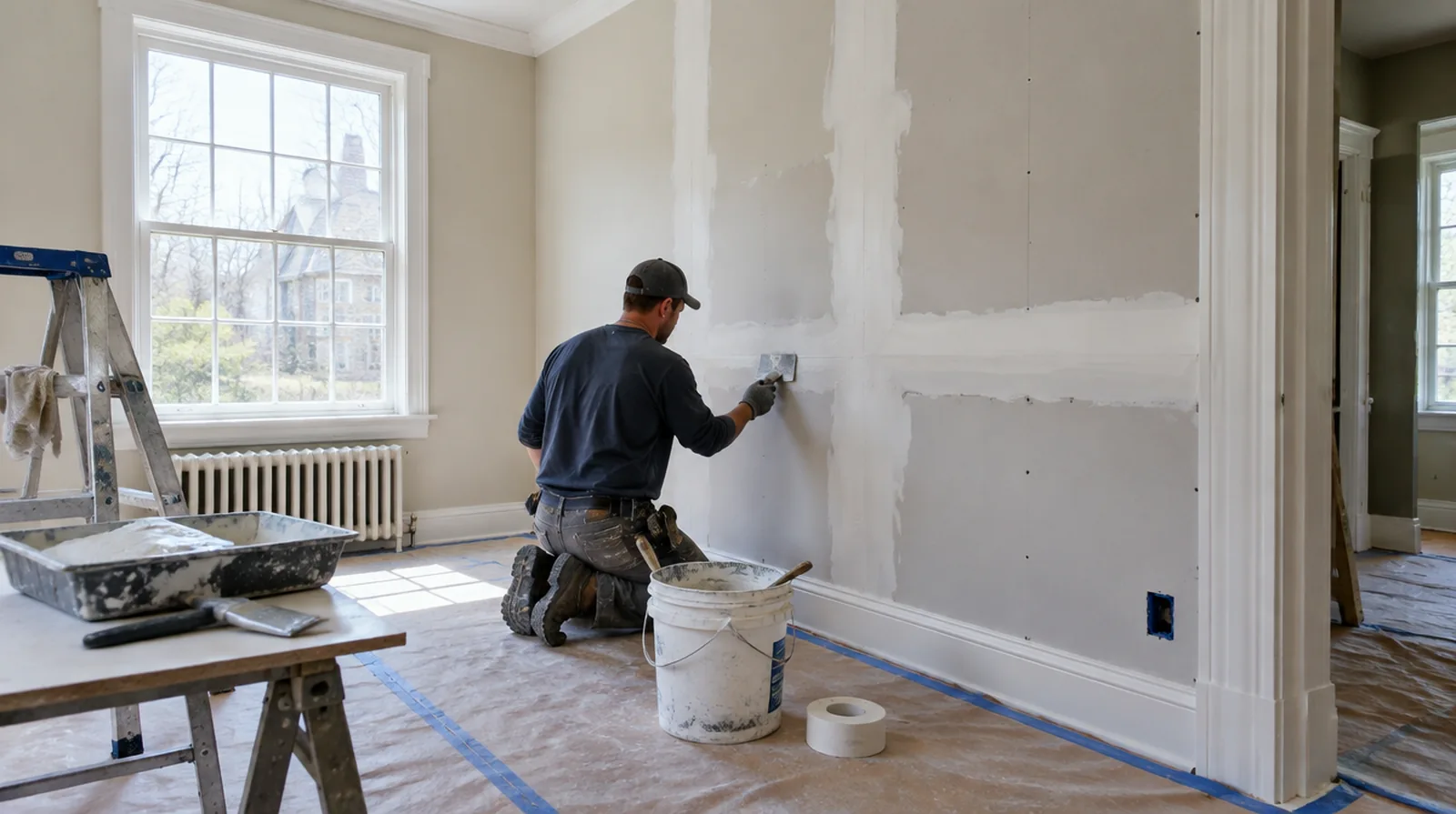
Finish after moisture control
Apply joint treatment to sound, sufficiently dry materials after the moisture issue has been addressed. Give each finishing layer time to dry instead of trapping dampness under additional material. If the surface condition is uncertain, allow for an assessment that can distinguish stable material from layers that should not be covered.
Keep contamination separate
Suspected microbial contamination or exposure to flood water is outside a routine cosmetic patch assessment. Ask an appropriate remediation professional about containment and material handling before drywall work is scheduled. When a quote includes multiple visits, ask what happens during each stage and when the interior needs to remain undisturbed between coats.
Project context in Newton
Narrow driveways and stone walls on tree-lined Newton streets can mean carrying board some distance from the curb. Cracks around Newton windows that reopen every winter usually reflect seasonal movement in old framing.
Scope questions before finishing
When panel replacement exposes a cavity, resolve any required inspection before that opening is closed and the finishing work begins.
Where several contractors share the renovation, identify the inspection and handover milestones that determine when each following stage can proceed.
While a removed panel exposes the wall cavity, complete the necessary review of concealed work before replacement board closes the opening.
If the project is part of a larger remodel, settle the sequence with flooring, trim and cabinet work before setting a final finishing date.
When reviewing the finished work, use the agreed lighting and natural room viewpoints so the assessment reflects the intended use of the space.
Where a finished perimeter is prominent, decide whether trim stays in position or is removed before agreeing how the new surface meets that edge.
Before comparing two proposals, check that both include the same protection, finishing and cleanup boundaries rather than comparing totals alone.
If the existing finish is unusual, keep a small reference sample or a close photograph to support the discussion about blending and restoration.
If the problem developed after another renovation, explain which nearby materials or building systems changed before the damage became noticeable.
At a ceiling or wall containing fittings, assign removal and reinstatement duties for the affected devices before repair access is needed.
For a distinctive existing pattern, retain a reference sample or detailed picture to make the matching discussion more specific.
For a wall receiving a decorative covering, provide its preparation requirements early sufficient for the drywall finish to support that product.
Explore the Newton drywall overview for related options, or read the project planning information before arranging the next stage.
More planning details for Newton
Radiator heat in a Newton winter dries the air enough to reopen hairline cracks along ceilings. Many Newton homes have plaster on wood lath, so a drywall patch must be shimmed flush with the older surface. Humid summers in homes without central air slow compound drying between coats.